
CALL NOW FOR YOUR FREE 30 MINUTE HYPNOSIS SCREENING! (850) 347-5700
Practical tools to help you live with greater calm
Simple, actionable tools--breathwork, routines, mindfulness, cognitive techniques, environment tweaks and hypnosis—to help you live with greater calm daily now!
?Would you like simple, practical tools that help you live with greater calm every day?
This article gives you a wide range of actionable tools and clear explanations so you can choose what fits your life. You’ll find breathing practices, routines, cognitive techniques, environment tweaks, and a dedicated section on different ways hypnosis can help you live with more calm.
Why calm matters
Calm is not the absence of stress; it’s the ability to respond to stress with clarity and resilience. When you increase your baseline calm, you improve decision making, sleep quality, relationships, and overall well-being.
What causes chronic stress and lack of calm
Stress comes from multiple sources and often builds up gradually, so it’s important to identify the contributors so you can target them. The causes are usually a mix of physical, mental, and environmental factors that interact with each other.

Physical triggers
Your body responds to sleep deprivation, poor nutrition, and lack of movement with higher baseline tension. If you regularly skip restorative sleep or eat in ways that spike blood sugar and cortisol, your nervous system will stay more reactive.
Mental triggers
Worry, rumination, and negative thought patterns keep your mind in a heightened state of arousal. You can reduce the intensity of these patterns by using cognitive tools and regular mental practice.
Environmental and social triggers
Cluttered spaces, constant noise, and high-pressure social dynamics all contribute to stress. Adjusting your immediate surroundings and relationship boundaries can produce significant and immediate relief.

Foundational habits for calm
Foundational daily habits act like the base of a house: when they are strong, everything built on top is more stable. Start with sleep, movement, nutrition, and hydration because they have large, predictable effects on your nervous system.
Sleep hygiene
Consistent sleep timing and routines signal safety to your brain and help regulate stress hormones. Aim for regular bed and wake times, a cool and dark environment, and a wind-down routine that avoids screens before sleep.

Movement and exercise
Regular movement reduces stress hormones, improves mood, and helps you discharge physical tension. You don’t need intense workouts every day—consistent gentle movement, like walking or stretching, already helps.
Nutrition basics
Eating balanced meals with protein, fiber, and healthy fats stabilizes blood sugar and reduces irritability. Small adjustments, like including a protein source at each meal and minimizing high-sugar snacks, can stabilize your mood.
Hydration and stimulants
Dehydration and excessive caffeine or alcohol make your nervous system more reactive and reduce sleep quality. Keep hydrated throughout the day and track how stimulants affect your anxiety and sleep.
Daily routines and rituals
Routines give structure to your day and reduce decision fatigue, which helps you conserve mental energy for things that matter. You’ll find that small rituals—simple repeated actions—can signal safety and calm to your body.
Morning routine for calm
A calm morning routine sets the tone for the day and reduces reactive stress. Include at least one intentional practice such as a short breathing exercise, gentle stretching, or a mindful breakfast.
Midday reset practices
A midday reset helps you recover energy and recalibrate focus when stress accumulates. Short practices like breathwork, a brief walk, or a 10-minute mindful break can make your afternoon more productive and calm.
Evening wind-down routine
You’ll sleep better when you give your nervous system cues to slow down before bed. Create a wind-down routine that includes low-stimulation activities such as reading, light stretching, or a warm shower.
Table: Sample daily schedule with calm practices
| Time of Day | Practice | Approx. Duration | Purpose |
|---|---|---|---|
| Morning | Gentle breathing + stretching | 10–15 min | Set a calm baseline |
| Mid-morning | Single-task work block | 60–90 min | Reduce multitasking stress |
| Midday | Walk or movement break | 10–20 min | Reset energy and mood |
| Afternoon | Short mindfulness or breathwork | 5–10 min | Recalibrate focus |
| Evening | Screen-free wind-down | 30–60 min | Signal safety for sleep |
| Night | Bedtime routine (reading, calm) | 20–30 min | Improve sleep onset |
Breathwork techniques
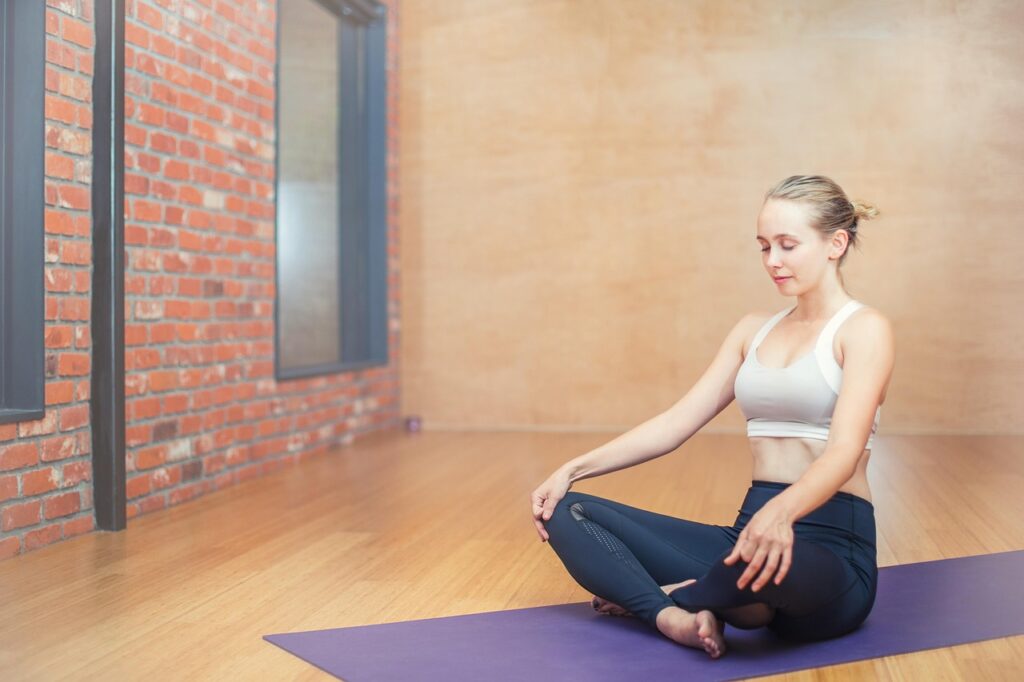
Breath is one of the fastest, most reliable levers to change how your nervous system feels. Different simple breath practices shift your autonomic balance; pick one or two that resonate and practice them regularly.
Diaphragmatic breathing
Diaphragmatic breathing engages the diaphragm and activates the parasympathetic nervous system. Lie down or sit tall, place one hand on your chest and one on your belly, and aim to let the belly rise more than the chest as you breathe slowly.
Practical steps:
- Inhale through your nose for 4 counts, feeling your belly expand.
- Exhale through your mouth for 6 counts, feeling your belly fall.
- Repeat for 5–10 minutes until you feel calmer.
Box breathing
Box breathing gives you structure and focus while calming the nervous system. It’s compact and can be used discreetly anywhere.
Practical steps:
- Inhale for 4 counts.
- Hold for 4 counts.
- Exhale for 4 counts.
- Hold for 4 counts.
- Repeat for 5 cycles or more as needed.
4-7-8 breathing
4-7-8 breathing slows your heart rate and encourages relaxation through extended exhalation. It’s particularly useful before sleep.
Practical steps:
- Inhale through the nose for 4 counts.
- Hold for 7 counts.
- Exhale audibly through the mouth for 8 counts.
- Repeat 3–4 times in the evening routine.
Table: Breathwork quick comparison
| Technique | Best for | Session length |
|---|---|---|
| Diaphragmatic | General calm, long practice | 5–20 min |
| Box breathing | Focus, quick reset | 1–5 min |
| 4-7-8 | Sleep onset, deep relaxation | 3–8 min |
Progressive muscle relaxation (PMR)
Progressive muscle relaxation helps you identify and release physical tension through systematic tensing and releasing of muscle groups. It trains awareness of where stress is held in your body and provides a reliable method to reduce somatic tension.
Simple PMR steps:
- Find a quiet place and sit or lie down comfortably.
- Start with your feet: inhale and tense for 5–7 seconds, then exhale and release for 10–15 seconds.
- Move up the body—calves, thighs, hips, abdomen, chest, hands, arms, shoulders, neck, and face.
- Finish with several slow diaphragmatic breaths, noticing the contrast between tension and release.

Mindfulness and meditation
Mindfulness trains your attention and changes how your brain reacts to stress. Regular practice doesn’t remove stressors, but it changes how you relate to them, which reduces reactivity and increases your sense of calm.
Mindfulness basics
Mindfulness is present-moment, nonjudgmental awareness of whatever arises—sensations, thoughts, and emotions. Start with short practices, like 5 minutes a day, and gradually increase as its benefits become apparent.
Body scan meditation
A body scan helps you reconnect with physical sensations and uncouple automatic worry from your experience. As you scan, note sensations without trying to change them; this fosters acceptance and reduces the urgency of stress.
Short body scan script:
- Lie down and close your eyes.
- Notice your feet, then slowly move attention upward.
- Observe each area: any tightness, warmth, or neutral sensation.
- If your mind wanders, gently bring it back to the current body area.
Guided imagery
Guided imagery uses mental images to create a sense of safety and relaxation. You can imagine a calm place and intentionally include sensory detail: what you see, hear, and feel.
Simple guided imagery practice:
- Close your eyes and take a few slow breaths.
- Picture a safe, calm location and use at least three senses in the image.
- Stay there 5–10 minutes, then gently return to the room.
Cognitive tools
Calm is shaped by what you think about and how you interpret events. Cognitive tools help you notice unhelpful thinking patterns and adopt more helpful, realistic perspectives.
Cognitive reframing
Reframing changes the meaning you give to a situation, which shifts emotional responses. Ask yourself: “Is there another way to interpret this?” and list alternative, more balanced explanations.
Example:
- Trigger: You didn’t get a response to a message.
- Initial thought: “They don’t like me.”
- Reframe: “They’re probably busy or saw it and will reply later.”
Acceptance and commitment techniques (ACT)
ACT helps you accept feelings without struggling with them and commit to actions aligned with your values. This reduces the energy spent on trying to control internal states and increases purposeful behavior.
Practical steps:
- Notice the feeling and name it (e.g., “I notice anxiety”).
- Move your attention to an action that aligns with your values.
- Repeat when you notice avoidance or fusion with thoughts.
Thought labeling and defusion
Labeling thoughts as “thinking” or “worrying” reduces their emotional grip. Defusion techniques help you see thoughts as transient mental events rather than absolute truths.
Example practices:
- Silently add “I’m having the thought that…” before a stressful thought.
- Visualize thoughts as clouds passing or leaves floating down a stream.

Time management and priorities
Time pressure is a major stressor; changing how you manage it reduces chronic tension. Use structured methods to clarify priorities and protect time for calm activities.
The Eisenhower matrix
The Eisenhower matrix separates tasks by urgency and importance so you can prioritize effectively. Use it to decide what to do now, schedule, delegate, or delete.
Table: Eisenhower matrix quick guide
| Quadrant | Action | Example |
|---|---|---|
| Urgent & Important | Do now | Crisis, deadline task |
| Important & Not Urgent | Schedule | Planning, relationship time |
| Urgent & Not Important | Delegate | Interruptions you can hand off |
| Not Urgent & Not Important | Eliminate | Time-wasters, trivial tasks |
Single-tasking and time blocking
Single-tasking reduces cognitive load and improves quality of work, which lowers stress. Use time blocks—short focused work sessions followed by breaks—to maintain energy and calm.
Setting boundaries
Clear boundaries protect your time and energy, which are essential to sustain calm. Practice saying short, kind phrases that communicate limits and offer alternatives when appropriate.
Example phrases:
- “I can’t take that on right now; I can help next week.”
- “I need quiet time this evening—let’s talk tomorrow.”
Environment design for calm
Your environment affects how your nervous system feels; small changes can have big cumulative effects. Design spaces that support relaxation and reduce sensory overload.
Decluttering and minimalism
Reducing visual clutter lowers cognitive load and makes spaces feel safer and more manageable. Start by tidying one area and maintaining small daily habits that prevent re-accumulation.
Sound and light
Soft lighting and low-level background sounds can reduce arousal and help you relax. Consider dimmers, warm bulbs, and ambient playlists or white noise for difficult environments.
Micro-habit spaces
Create specific micro-habit spaces—locations associated with a particular calming ritual, like a chair for meditation or a corner for reading. Repetition strengthens the association and makes it easier to enter calm states.
Social and relationship tools
Relationships are both a major source of support and a source of stress; improving communication and boundaries improves calm. You’ll find that small conversational practices help maintain harmony and emotional balance.
Communicating your needs
Being clear and kind about your needs reduces resentment and confusion. Use “I” statements, describe what you need, and suggest practical options to meet it.
Example: “I find noise in the evening stressful. Could we keep music off after 9 pm or use headphones?”
Saying no kindly
Saying no doesn’t require hostility; you can decline while remaining respectful. Practice brief, polite refusals and, if helpful, offer an alternative that works for you.
Support networks
Regularly connecting with supportive people reduces isolation and buffers stress. Prioritize relationships that energize you and set limits with people who drain you.
Technology and calm
Technology can both help and hinder calm, depending on how you use it. Adjusting settings, creating boundaries, and using tech purposefully can preserve your attention and reduce friction.
Notifications and device use
Notifications fragment attention and increase stress; reduce interruptions by customizing alerts. Turn off nonessential notifications and create focused work modes on your devices.
Digital Sabbath and scheduled checks
Scheduling times to check email and social media prevents constant reactivity. Try batching digital tasks and having tech-free windows to replenish attention and calm.
When to seek help
If stress interferes with your daily functioning, professional support can provide personalized strategies and medical guidance. Early help often prevents escalation and improves outcomes.
Professional therapy and counseling
Therapists can teach evidence-based tools tailored to your patterns and provide a supportive space to process difficult experiences. Look for clinicians experienced with anxiety, trauma, or the specific issue you face.
Medication considerations
Medication can be a helpful, temporary tool when biological factors significantly elevate stress. Discuss benefits and risks with a psychiatrist or primary care provider to make an informed choice.
Crisis resources
If you ever feel unsafe or overwhelmed to the point of crisis, reach out to local emergency services or crisis lines immediately. Keep emergency contacts and resources easily accessible.
Different ways hypnosis can help you live
Hypnosis is a practical tool that complements many other methods in this article, offering targeted ways to change habits, reduce anxiety, and increase calm. In this section you’ll learn what hypnosis is, how it works, specific applications, and how to practice safe self-hypnosis.
What is hypnosis?
Hypnosis is an intentional state of focused attention and relaxed awareness that enhances receptivity to positive suggestions. It’s not mind control; you remain in control, aware, and able to reject suggestions that conflict with your values.
How hypnosis works
Hypnosis works by combining relaxation, focused attention, and suggestion to bypass habitual mental filters and create new patterns. This increases the brain’s plasticity for learning and habit change, making certain therapeutic suggestions more effective.
Conditions hypnosis can help with
Hypnosis can support a wide range of issues by changing automatic reactions and strengthening new habits. Common applications include:
- Anxiety reduction: Reduces physiological reactivity and worry loops.
- Sleep improvement: Establishes calming associations for bedtime.
- Pain management: Modulates perception and coping with chronic pain.
- Habit change: Supports smoking cessation, overeating reduction, and more.
- Performance enhancement: Improves focus and confidence for work or sports.
Table: Hypnosis uses and how it helps
| Issue | How hypnosis helps | Typical format |
|---|---|---|
| Anxiety | Lowers arousal, reframes responses | Guided sessions, recordings |
| Insomnia | Builds relaxation cues for sleep | Sleep-focused suggestions |
| Chronic pain | Alters perception and coping | Clinical hypnotherapy |
| Habit change | Strengthens new behavioral scripts | Self-hypnosis, therapist-led |
| Performance | Enhances focus, reduces performance anxiety | Imagery + suggestion |
Forms of hypnosis
Hypnosis comes in many forms, each suited to different needs. Clinical hypnotherapy with a trained practitioner is structured and goal-oriented, self-hypnosis lets you practice daily, and recorded sessions provide convenient support at home.
Types explained:
- Clinical hypnotherapy: One-on-one with a licensed professional, often integrated with psychotherapy.
- Self-hypnosis: You learn techniques to guide your own sessions for daily practice.
- Recorded hypnosis: Pre-made recordings you use at home for specific goals.
- Stage hypnosis: Entertainment-focused and not therapeutic; it’s scripted and not suitable for clinical goals.
Self-hypnosis step-by-step
Self-hypnosis is a practical skill you can use regularly to build calm and support other goals. The steps below are straightforward and safe for most people.
Self-hypnosis steps:
- Choose a quiet, comfortable place and a specific goal for the session (e.g., “I want to feel calmer when I work”).
- Set an intention in a short phrase and repeat it once or twice (e.g., “I am calm and focused”).
- Enter a relaxed state using breathwork or progressive muscle relaxation for 3–5 minutes.
- Use imagery or direct suggestion aligned with your goal for 3–10 minutes: speak in present tense, positive terms, and keep suggestions short.
- Return gradually: count up from one to five, suggest increased alertness, and open your eyes.
- Reinforce: after the session, note any small shifts and practice again the next day.
Short self-hypnosis script example
This short script is usable for a quick calm reset and can be adapted to different goals. Read it aloud in a soft voice or record it for playback.
Script:
- Start by settling into a comfortable position and taking three slow, deep breaths.
- On each exhale, allow your shoulders and jaw to soften.
- Imagine a warm, safe light at the center of your chest with every breath expanding gently.
- Say to yourself, “I am calm, steady, and in control.” Repeat three times.
- Visualize a recent stressful moment, then see it shrink and drift away like a small object on a river.
- When you feel ready, count up from 1 to 5, feeling more alert and calm with each number.
Incorporating hypnosis into daily routine
Use short self-hypnosis sessions as part of your morning or evening rituals or during midday resets. Consistency matters: even 5–10 minutes daily builds neural pathways that support new habits and calmer baseline states.
Safety, myths, and contraindications
hypnosis is safe for most people, but it’s not appropriate in some circumstances and myths create unnecessary fear. Avoid hypnosis if you have certain unmanaged psychiatric conditions (e.g., acute psychosis) without clinician oversight, and consult a mental health professional if you have history of dissociation.
Common myths clarified:
- Myth: You’ll lose control. Fact: You stay aware and consent to suggestions.
- Myth: Hypnosis erases memory. Fact: It does not delete memories and often improves recall for therapy.
- Myth: Only weak-minded people are hypnotizable. Fact: People vary, and responsiveness can be trained.
How to choose a hypnotherapist
Choosing a qualified hypnotherapist ensures you receive ethical, effective care. Look for credentials, relevant clinical experience, and a collaborative approach.
Checklist:
- Training: Formal training in clinical hypnotherapy and recognized certification.
- Professional background: Clinical experience in psychotherapy or healthcare is helpful.
- Client-centered approach: Willingness to explain methods and integrate with your goals.
- References and reviews: Positive client outcomes and transparency about process.
Combining hypnosis with other therapies
Hypnosis often works best as part of a multimodal approach that includes cognitive-behavioral techniques, sleep hygiene, and movement. Talk with your therapist about integrating hypnosis into your broader care plan to ensure consistency and safety.
Bringing it together — building your calm toolkit
A robust calm toolkit is personalized, practical, and flexible, combining fast-acting tools with long-term habits. Start by selecting a few techniques from different categories—breathwork, a small routine change, one cognitive tool, and, if appropriate, hypnosis—and practice them consistently.
Table: Starter toolkit comparison (time commitment vs. impact)
| Tool | Time per day | Expected impact in 2–4 weeks |
|---|---|---|
| Diaphragmatic breathing | 5–10 min | Lower baseline anxiety |
| Short self-hypnosis | 5–10 min | Better sleep and reduced reactivity |
| PMR | 10–15 min | Reduced muscle tension |
| Body scan meditation | 10–20 min | Improved awareness, less rumination |
| Sleep routine | 30–60 min nightly | Better sleep quality, mood stability |
30-day calm plan (weekly breakdown)
A structured plan helps you build momentum and see change. The plan below is simple and adaptable to most schedules.
Week 1 — Foundations:
- Focus: Sleep schedule + simple breathwork each morning.
- Practice: 10–15 minutes nightly wind-down, 5 minutes of diaphragmatic breathing each morning.
Week 2 — Add movement and mindfulness:
- Focus: Daily movement and short body scan.
- Practice: 10–20 minute walk midday, 10-minute body scan each evening.
Week 3 — Cognitive and environment:
- Focus: Thought labeling and decluttering one space.
- Practice: Practice reframing stressful thoughts and declutter a small area.
Week 4 — Hypnosis and integration:
- Focus: Learn a short self-hypnosis script and use it daily.
- Practice: 5–10 minutes of guided self-hypnosis each evening and maintain other habits.
Final thoughts
You can build a reliable system for calm by combining small, consistent practices that address body, mind, and environment. Start with one or two shifts, be patient with yourself, and iterate as you learn what works best for your life.
If you want, I can create a personalized 30-day plan tailored to your schedule and the specific stressors you face. Which part of this toolkit would you like to try first?